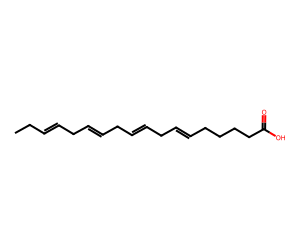
1-linoleoyl-gpi (18:2)* to stearidonate (18:4n3)

Numerator Metabolite
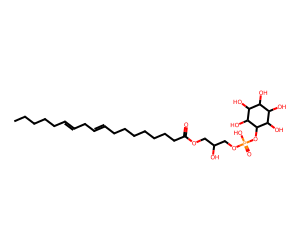
Structure of 1-linoleoyl-gpi (18:2)*
Metabolite Accession: GCST90199821
Name: 1-linoleoyl-gpi (18:2)*
Hmdb Id: HMDB0240597
Super Pathway: NA
Sub Pathway: NA
Inchikey: SAHCQBPGXQFTRA

Denominator Metabolite

Structure of stearidonate (18:4n3)
Metabolite Accession: GCST90199721
Name: stearidonate (18:4n3)
Hmdb Id: HMDB0006547
Super Pathway: NA
Sub Pathway: NA
Inchikey: JIWBIWFOSCKQMA

Associated Genomic Regions

Region: rs174546

Click a 'Plot' button in the tables to the right to view a locus plot here.

Clumped rQTL variant

Loading Ratio Plot...

Loading Numerator Plot...

Loading Denominator Plot...

SNP Summary

Chr:
11
Beta (Ratio):
0.286
Position:
61569830
SE (Ratio):
0.020
Effect Allele:
T
Z-score (Ratio):
14.250
Reference Allele:
C
-log10(P):
-104.422
MAF:
0.340
Beta (Num):
0.165
Novel Locus:
No
SE (Num):
0.016
Beta (Den):
-0.121
SE (Den):
0.015
No CNV overlap
rQTL cluster:
Reaction Distance:
NA
Closest Genes:

LLM Analysis

Numerator Metabolite Explanation:

Glycerophospholipid metabolism.3[1], 4[2]

Denominator Metabolite Explanation:

Alpha-linolenic acid metabolism.5[1], 6[2]

Ratio Explanation:

The ratio reflects the enzymatic efficiency of FADS2, which converts alpha-linolenic acid to stearidonic acid, relative to the incorporation of linoleic acid into glycerophosphoinositols.

Ratio Evidence:

reaction where the ratio is shared through a pathway

Gene Ratio Phenotype Relationship:

Reduced FADS2 activity, indicated by a lower ratio, is associated with altered lipid profiles, including lower HDL and higher triglycerides.7[1], 8[2] This dyslipidemia is a known risk factor for cholelithiasis and type 2 diabetes, linking the genetic modulation of fatty acid metabolism to these phenotypes.9[3], 10[4]

Phenotype Driver:

Gene-centric:FADS2

Downloads

Download the full rQTL summary statistics file for this metabolite ratio. Data contains the loci listed here. For each SNP (chromosome, effect_allele, reference_allele, pos_name, position) these columns contain the summary statistics of the ratio (beta, pgain, pval, se, z), the numerator metabolite (beta_1, pval_1, n_iids_1, effect_allele_frequency_1, se_1, z_1) and the denominator metabolite (beta_2, pval_2, n_iids_2, effect_allele_frequency_2, se_2, z_2)

Download rQTL Data