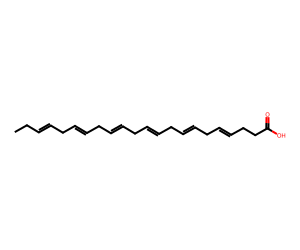
dihomo-linoleate (20:2n6) to Docosahexaenoate DHA; 22:6n3

Numerator Metabolite
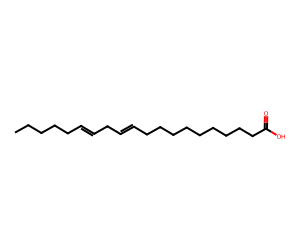
Structure of dihomo-linoleate (20:2n6)
Metabolite Accession: GCST90200320
Name: dihomo-linoleate (20:2n6)
Hmdb Id: HMDB0005060
Super Pathway: NA
Sub Pathway: NA
Inchikey: XSXIVVZCUAHUJO

Denominator Metabolite

Structure of docosahexaenoate (dha; 22:6n3)
Metabolite Accession: GCST90199651
Name: docosahexaenoate (dha; 22:6n3)
Hmdb Id: HMDB0002183
Super Pathway: NA
Sub Pathway: NA
Inchikey: MBMBGCFOFBJSGT

Associated Genomic Regions

Region: rs1535

Click a 'Plot' button in the tables to the right to view a locus plot here.

Clumped rQTL variant

Loading Ratio Plot...

Loading Numerator Plot...

Loading Denominator Plot...

SNP Summary

Chr:
11
Beta (Ratio):
0.104
Position:
61597972
SE (Ratio):
0.012
Effect Allele:
G
Z-score (Ratio):
8.714
Reference Allele:
A
-log10(P):
-40.366
MAF:
0.343
Beta (Num):
0.023
Novel Locus:
Yes ✔️
SE (Num):
0.016
Beta (Den):
-0.081
SE (Den):
0.015
No CNV overlap
rQTL cluster:
Reaction Distance:
NA
Closest Genes:

LLM Analysis

Numerator Metabolite Explanation:

Linoleic acid metabolism4[1]

Denominator Metabolite Explanation:

Unsaturated fatty acid biosynthesis5[1], 6[2]

Ratio Explanation:

This ratio reflects the balance between omega-6 and omega-3 fatty acid pathways, where higher values suggest increased FADS activity, potentially leading to pro-inflammatory states.7[1], 8[2]

Ratio Evidence:

reaction where the ratio is shared through a pathway

Gene Ratio Phenotype Relationship:

Variants in FADS genes alter desaturase activity, affecting the dihomo-linoleate to DHA ratio, which is associated with altered lipid profiles (hypercholesterolemia, triglycerides) and an increased risk for cholelithiasis and type 2 diabetes.9[1], 10[2], 11[3], 12[4], 13[5], 14[6], 15[7]

Phenotype Driver:

Gene-centric:FADS1/FADS2

Downloads

Download the full rQTL summary statistics file for this metabolite ratio. Data contains the loci listed here. For each SNP (chromosome, effect_allele, reference_allele, pos_name, position) these columns contain the summary statistics of the ratio (beta, pgain, pval, se, z), the numerator metabolite (beta_1, pval_1, n_iids_1, effect_allele_frequency_1, se_1, z_1) and the denominator metabolite (beta_2, pval_2, n_iids_2, effect_allele_frequency_2, se_2, z_2)

Download rQTL Data